Dr. Pop


Dr. Pop Blog

Detroit’s Rough Road

6/15/2010 by Gary Phillips - No comments

Finally Got the NewsAt nearly 139 square miles in size, Detroit is larger than Boston, Manhattan and San Francisco combined.  Home to some two million at one point, the population has shrunk to less than half at 800,000 and decreasing.  Motown, the once Motor City U.S.A., has seen hard times since either one of those appellations applied to a city that’s been struck with what my Uncle Norman would have called, “buzzard’s luck.”


Detroit has been riding a rough road for a long time.  Mayor Bing and wonks like Data Driven Detroit controversially seek to physically downsize the city. This past May, seven-year-old Aiyana Jones was killed by a policeman’s bullet in a tragic incident arising from a botched police raid.  Also in May, Kwame Kilpatrick, who once billed himself as the nation’s first hip-hop mayor of Detroit, was  sentenced from 18 months to five years for violating probation.  You might recall when in office the married Kilpatrick was busted for sexting the woman he was having an affair with, his chief of staff Christine Beatty.  Kilpatrick, whose administration was plagued by several scandals and charges of corruption, and who once had a license to practice law, was initially convicted of two counts of perjury.


Kilpatrick was sent to the former Jackson prison, which is now called the Charles Egler Reception and Guidance Center.  Jackson was once home to another Detroit native, the former pimp and junkie Donald Goines.  In 1969, being re- incarcerated at Jackson, Goines started reading the paperback original novels of another pimp and hustler, Robert Beck aka Iceberg Slim.  This and his mother bringing him a manual typewriter while in the joint inspired Goines to write and eventually publish such books as Never Die Alone (filmed in 2004 with rapper DMX as the criminal protagonist) and arguably his best book, Daddy Cool.


But it’s Detroit in the era of Goines and hit songs like “Only the Strong Survive and “It’s Your Thing,” where the city and places like Hamtramck and even Flint, 66 miles away, were on the boom due in no small measure to the car industry.  Ford, General Motors and Chrysler, were turning out cars and trucks like there was no tomorrow — where at the point of production, peoples’ lives changed materially and politically.


Recently Dr. Pop and I attended a screening (a fundraiser to help send young activists and organizers to the U.S. Social Forum in Detroit next week) at the Community Coalition in South L.A. of a 55-minute black and white documentary originally released in 1970 called Finally Got the News.  Made by Stewart Bird, Rene Lichtman and Peter Gessner, Finally dynamically captures a period in time when the League of Revolutionary Black Workers was on the move.  This was a group who arose from the shop floor of Detroit’s automakers who sought to not only confront the racism and unequal treatment inside the plants, but the complacency and cozy relationship of their union, the United Auto Workers, with management and the police. Read More…

Detroit Summer

6/15/2010 by Celine Kuklowsky - No comments


Aiyana Stanley Jones

A few weeks ago, Aiyana Stanley Jones was killed by the Detroit police, who raided her home while she was sleeping.  The incident passed the national media’s “if it bleeds it leads” rule and was even more tragic because Aiyana was only 7 years old.


Five days later, 20-year-old Damion Gayles was shot and wounded by the police only a few blocks away.  The community was outraged and the media picked up that outrage as well.


But what is less known about Detroit is how the people in this city that has been under economic, political, and police siege for so long, have been gradually building an infrastructure for peace and promise from the grassroots.


Peace Zone for LifeWhen violent crime and police brutality spiked in the 90s, the Detroit Coalition Against Police Brutality was formed to document acts of policy brutality and misconduct, to create greater accountability and justice from law enforcement, and to advocate for a police force that is more racially diverse, more respectful, and more adept at dealing with and serving people of different backgrounds and abilities.


One of the Coalition’s core organizing strategies is to form “Peace Zones for Life” across the city in which mediators are called in to arbitrate conflicts between neighbors and families rather than the police.  Their idea is to “put the neighbor back in the hood” and to transform tragic events into community-building efforts for safer futures.


The killing of Aiyana and shooting of Damion have sparked the creation of new Peace Zones  across the City.  The shootings are tragic, but the innovation and tenacity of the Peace Zones deserve celebration.


Another kind of peace zone are the spaces and places being made where youth can participate in change-making and thrive.  Central to such efforts are veteran activist Grace Lee Boggs (who will be 95 in July) and the Boggs Center, which was established in 1995 by friends and associates to honor and continue the revolutionary legacy of theory and practice of Grace Lee and her husband, James Boggs, now deceased. Read More…

Detroit Call to Action

6/15/2010 by Gilda Haas - No comments


This is our city!


People are resisting the assault on our city. Detroiters are standing up against the schemes of Mayor Bing, Emergency Financial Manager Bobb and powerful foundations who are plotting to take our land, close our schools, sell our last public hospital, destroy whole neighborhoods and are putting everything they can think of up for sale.


Behind closed doors they are making plans that will affect our city and our children for generations to come. They refuse to share their plans in open forums, refuse to support the elected school board and challenged court orders questioning their powers. The private foundations supporting this secrecy are not accountable to any one, using their money to dictate winning and losing neighborhoods.


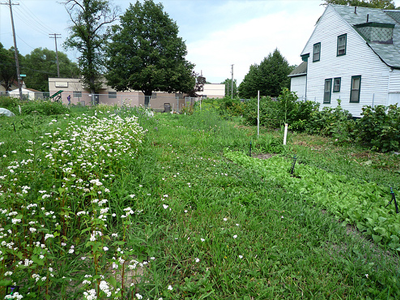
We are outraged by this assault on our city and on democracy. We know there is a better way. Across Detroit, long abandoned neighborhoods are coming to life with gardens, art projects and new businesses. Schools are resisting the effort to turn our children into mindless test takers, creating imaginative life affirming programs supporting community growth. We are restoring community ties, turning war zones to peace zones for life.


These activities have caught the attention of national and international media, telling the story of a new Detroit resurgence.    These activities have also attracted the attention of those who see another opportunity to make money by shifting public resources into private hands. This is our city. These are our children. No one has a right to determine our future without us.


We demand


  • An immediate halt to school closings.
  • Open meetings in community centers, churches, civic organizations and block clubs to discuss the future of our city.
  • No use of eminent domain to take land for private use.
  • Full disclosure of foundation board members economic interests in our city.


Join us to


  • Turn all our schools into neighborhood resource centers, where young people develop their minds, hearts and imagination solving the problems facing our communities.
  • Maintain open land for small community gardens.
  • Turn vacant houses into neighborhood resources.
  • Reconnect generational ties through public art, urban gardens, community restoration projects.


Support


  • The right of Detroiters to make our own decisions about our future.
  • Innovative schools transforming education in service to our communities.
  • The imagination of teachers, activists, small businesses, urban farmers, artists and young people who are already rebuilding Detroit from the ground up.


Detroiters for Dignity and Democracy

Detroit Green

4/14/2010 by Celine Kuklowsky - 2 comments


When thinking about urban environmental repair, there is perhaps no better place to start than in what may seem to be the most unlikely of places: Detroit, MI.  Yes, the ex-capital of the auto-industry is rewriting the rules of urban regeneration as we know them and Detroit residents are creating a whole new way of thinking city-life.


As Rebecca Solnit says, Detroit’s best-known recent history is one of urban apocalypse characterized by “deindustrialization, depopulation, and resource depletion”


One third of the population lives beneath the poverty line and local officials estimate unemployment to be near 50% (the official figure is 30%).


Since the mid 1950s, the population has gone from nearly 2 million people to less than 900,000. Thirty percent of Detroit’s land is currently vacant – roughly the size of San Francisco in square miles. On top of this, the entire city of Detroit has become a  “food desert” — there is not one produce-carrying supermarket in the City. The endless rows of abandoned buildings and houses of what was once Motor City offer an eerie glimpse into a “post-American” future.


Downtown Detroit building

Flickr/tronics


abandoned market store


abandoned Detroit building

Flickr/bobjagendorf


But out of this land, another story is emerging, in which the people of Detroit are re-inventing their city as the urban agriculture center of the country.


I recently met Asenath Andrews, the principal of the Catherine Ferguson Academy, a high school for young mothers and pregnant teens who raise animals and organic fruits and vegetables.  The school also offers classes on beekeeping and more to the community..


The conversation opened a window for me upon Detroit Green.

Read More…